Showing posts with label decorating. Show all posts

The Right Living Room For Your Home


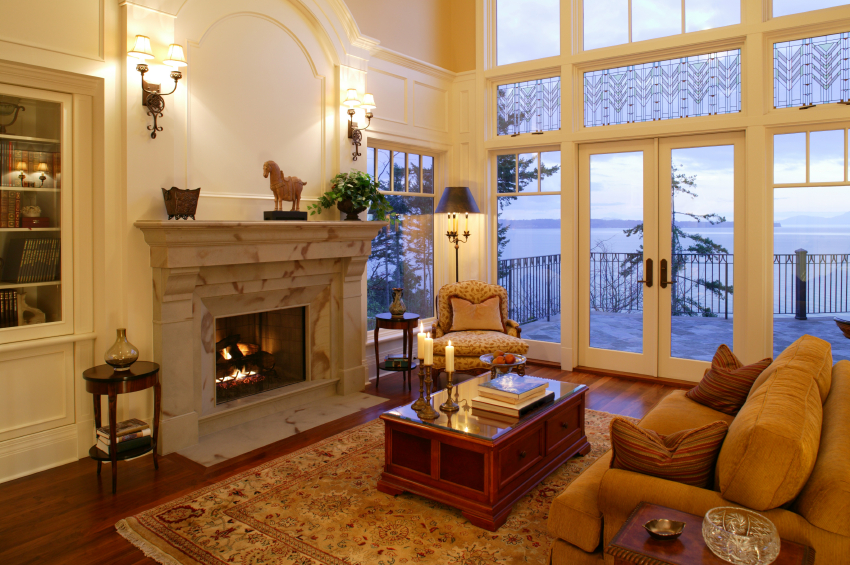
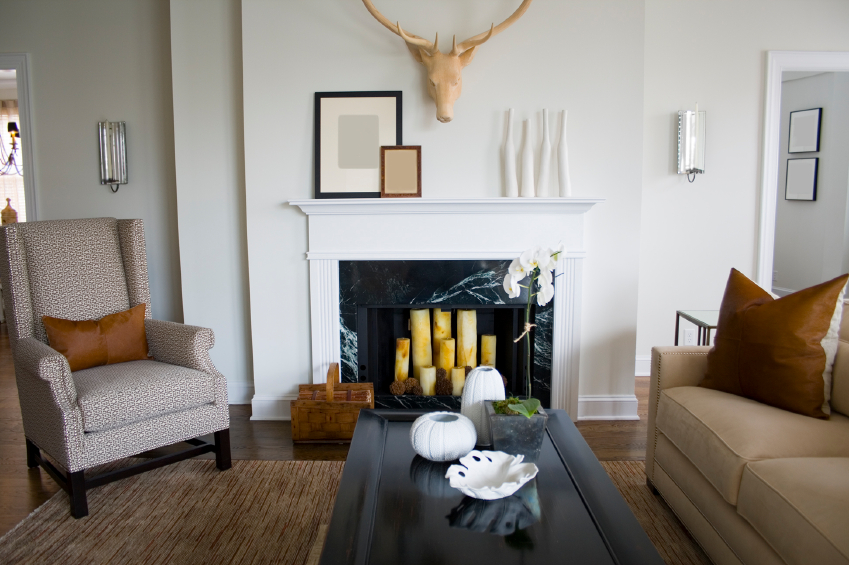
For many homes, the living rooms is the most public and most used area of the house. Whether it is used to entertain guests, spend time with the family, or lounge while watching television or reading a good book, living rooms tend to be a natural place for us to gravitate towards. Your use of the living room and the style you decorate it in can vary greatly. Here are a few simple decorating guidelines that can help make your living room become the room you want it to be.


Seat positioning -


When using armchairs and sofas, be mindful of how near or far they are from each other. The living room is a natural place to have relaxed conversations, and as such, it should accommodate this. When placing sofas and chairs, try to make sure that they are always within 8 feet of each other. This will make it easier for people to talk with each other. Place the seats so that they face the room's focal point so people can see and hear everybody else.


Make it cozy, but not too cramped-

While you want the seating close enough to easily communicate, its important that there is enough space for everybody to feel comfortable and not feel stuffy and cramped. Make sure that there are open paths to walk between the pieces of furniture. Walkways of about 2.5 feet (30 inches) can give a nice aisle without making the room feel too spaced out. If you have a coffee table or other furniture in front of the sofa or chairs, you should leave 14-18 inches to allow for comfortable knee space.

Anchoring the furniture -

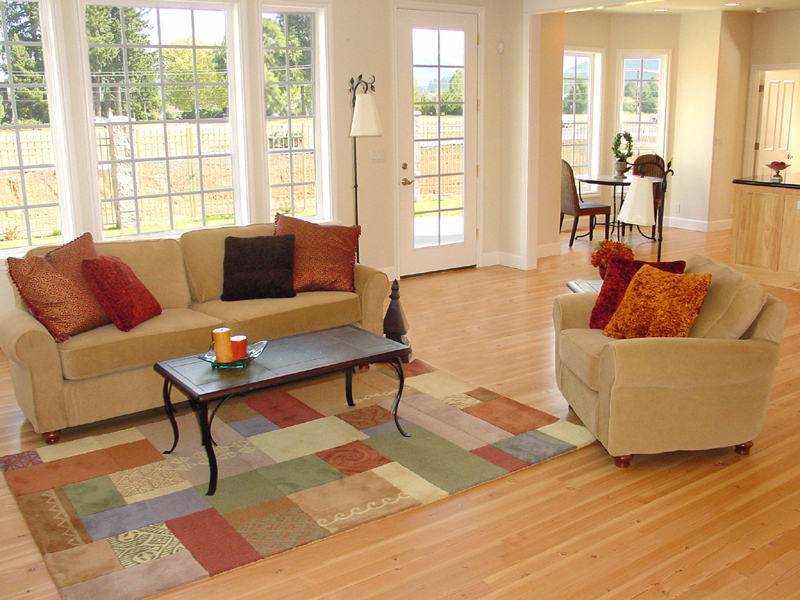
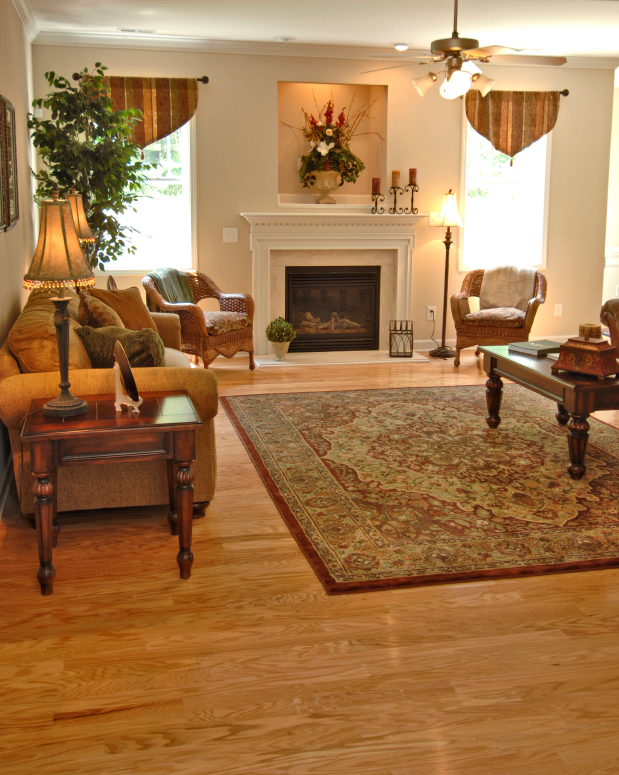
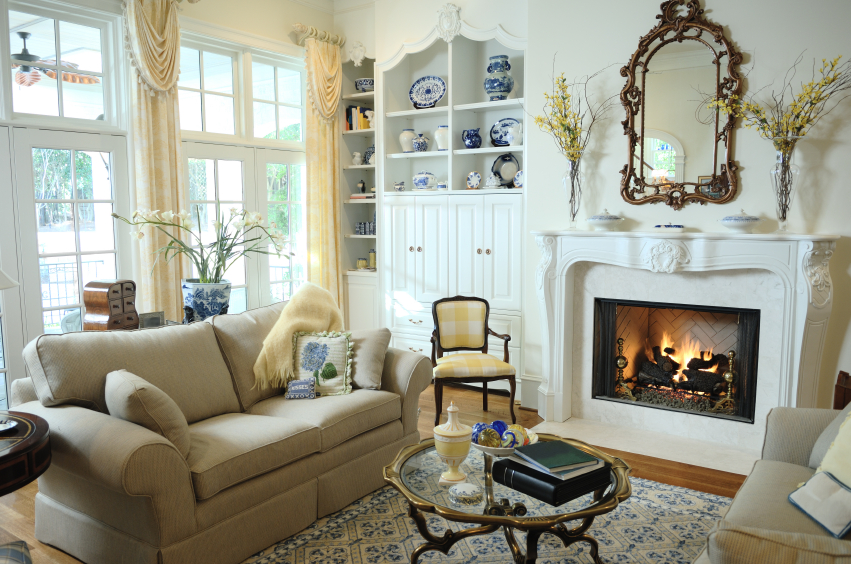
A great way to give the room a centered feel is by placing a rug in the center of the room. Make sure that it is either large enough for all of the furniture to fit onto it, or small enough that the edges touch the furniture pieces surrounding it. Facing furniture around a focal point, such as a window, television, or fireplace, also helps to achieve this.

Other useful ideas -

  • If space is limited, use nesting tables to save room.

  • Install in-floor electrical outlets to make plug-in access easier and to make the room more flexible when rearranging furniture.
  • If you are not placing a piece of furniture against a wall, make sure that the back is presentable and does not need repair or to be upholstered.
  •  Longer sofas are great for creating more seating space without more furniture.
  • Ottomans make great additional seating and can be moved near a cabinet or table when not being used. Upholstered ottomans can also serve multiple purposes, such as a footstool or extra table.

Use these tips to get started in making a living room that is comfortable and meets your needs, whatever they may be. For other useful decorating tips and methods, visit our website at www.howtodecoratemyhome.net.

Creating Your Perfect Family Room

Since families come in all shapes and sizes, family rooms should too . Whether yours is designed for an exciting night watching the ball game, playing cards with a group of guests, or letting the kids wear themselves out, you can make the perfect family room for your situation. Here are a few ideas that will help you create the room you want and need.

Many family rooms are in the basement, where space is more readily available. Because basements typically lack a lot of natural lighting, it is usually important to have adequate alternatives. Floor lamps are portable and easy to change so they can be a great lighting option. Using colors in your color scheme that reflect light is also a good idea, and can also help to give the family room a lively, energetic look.

Family rooms often are one of the biggest rooms in the house. You might consider breaking the family room into different activity areas. While you might have one area for watching television, another section could include a table for eating that doubles as a great surface to play games or for children to do artwork. Ping pong and pool tables are also a nice addition to a family room. Make sure that if you have an entertainment section you remember to position activity sections in a way that allows traffic to flow behind and around it - this will keep television watchers and gamers from being frequently interrupted.

Because family rooms are typically a very busy room, you need it to be easily cleaned. Slips and covers on couches and sofas are a great way to keep food and drink spills from causing any permanent damage. Options of hardwood or tile floors are a way to make sure floors can be kept neat with little effort. If you choose carpet, select an option that can be easily and quickly cleaned. Use drawers, tubs, bins, and baskets to make sure you have plenty of room for your favorite movies, games, gaming consoles, remotes, blankets, toys, and whatever else you choose to keep in your family room.

You will want to easily accommodate a crowd. Use large couches and sectionals to provide seating for the largest number of people without requiring many pieces of fixed seating.  Bean bags and ottomans are also a great and easy way to provide additional seating that is easy to store, and having a few folding chairs in the closet can be handy as well.

These simple tips will help you create a family room that is capable of serving all the different capacities that you will need it to. Making the “perfect room” can be hard, but by following some of these guidelines, you will have the right room on hand, whatever the occasion is. For more tips and tricks on how to decorate your home, visit our website at www.howtodecoratemyhome.net

Giving Your Living Room A New Look


It isn't too uncommon that we get bitten by the re-decorating bug and have the urge to freshen up the rooms in our home. If you are like most people, though, the bug often bites at inconvenient times when the budget is tight and resources are spread thin. You may have said to yourself, “This room looks old and a fresh, new look would be great...but right now just isn't a good time.” After giving it little more than a wistful thought, you write it off as another impossible dream that just can’t come true any time soon.

The great secret about the dream in this scenario is that it can come true. It can and should have a happy ending. Freshening the look of your living room doesn't have to break the bank. It won’t necessarily cost you a fortune to change things up enough to get a new, refreshing look. Here are a few easy and affordable tips to mix things up and give your living room that fresh, new feel you’re looking for.

Change your couch with a slipcover -

A slipcover is one of the easiest and most affordable way to change the look of your furniture. You can update the color scheme of your entire room by getting a few new covers for your sofas and chairs. This gives you the style benefit of a new set of furniture without a large commitment or cost.

Switch out your throw pillows -

Swapping out your throw pillows is another easy way to mix things up in your living room. You might even even change the pillows with the seasons or during holidays. Throw pillows are an easy and affordable way to regularly give your room a fresh, new look.

Add a rug -

Flooring makes up about 30% of what you see in a room. Adding a rug, whether on a carpet or hardwood floor, will give your room a new floor look and feel without the cost or hassle of actually redoing the entire floor.

Modify your walls -

Painting a single room is a easier and cheaper that painting your entire house. Pick a new color that fits with your current home decor (furniture, rugs, etc) and spice up your room at a reasonable cost. Adding molding or trim can be a little addition that makes a big difference. If you are looking for something a little more bold, paint just one wall and add something new like a painting or clock for a nice focal point.

Swap out your pictures -

An important design element in nearly all living rooms is the pictures. Swapping out some pictures seasonally or with the holidays can create a nice compliment to your other decorations. Switching full color photos for black and white will also help to create a fresh, new look.

These are just a few quick, easy, and affordable tips on how to revamp your living room without breaking the bank. Please share the tips, hints, or thoughts that have worked for. For more ideas about decorating your home, visit our free online lessons at howtodecoratemyhome.net. 

How To Decorate Your Home: Tips on Accessorizing


The best way to give your home a personal flair that is uniquely you is accessorizing. Accessories are the finishing touches that make your a house feel like a home. Home decorating accessories include everything from plants, lamps, pictures, paintings, and pillows. You can add almost anything else to give your home a touch of your personality. Here are several basic ideas that can help you to get started in decorating your home.


Grouping –


When you use a collection of items, it typically works best to keep them together as a grouping instead of spreading them out as individual pieces. Curio cabinets and sofa tables are often used to display collections. You should considering grouping your collections in odd numbers (3, 5, 7). Whether you hang your decorations, or place them on shelves, spacing them out at varying heights is a great way to create a more dynamic look.

Here are a few examples of how  grouping accessories together can work.


Throw Pillows –


Throw pillows are one of the most common accessories used in home decorating. They can be a fun and easy way to add a splash of color and fun to any room. Throw pillows are a great accessory because they are easily replaced, and can be changed out for special occasions, or seasons and holidays. Be sure to consider the style and color of your room when you are looking for new or additional pillows to use.


Area Rugs –


Area rugs can help define a space and help pull it together through color and texture. They tend to be the “show offs” of room accessories, and add design, mood, and pattern to a room. They are extremely useful in establishing a style to the room that other accessories can support. Placing area rugs at an angle, or angling a sofa or other furniture across a corner of a rug can help add excitement to your room.


Wall Hangings –


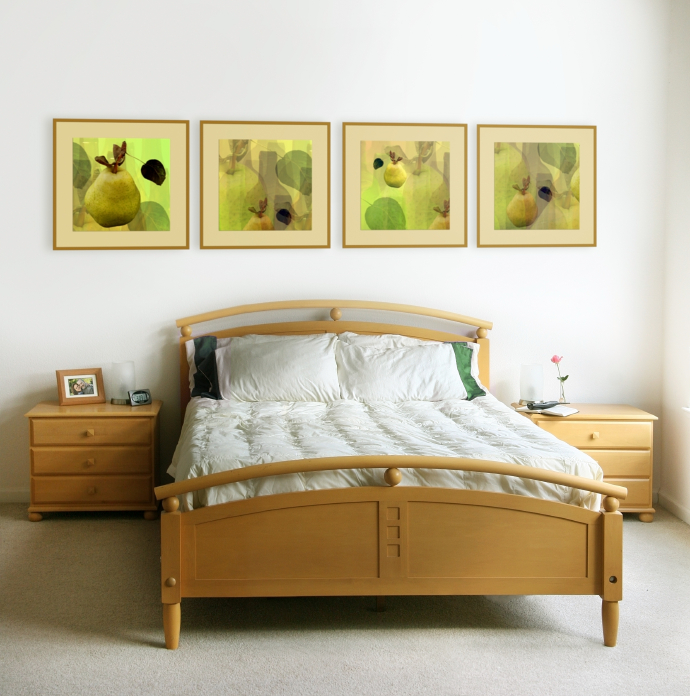
Wall hangings and framed art are popular accessory in most homes. The most important thing to keep in mind is that you generally want wall hangings to take an entire space. A small hanging or framed art piece on a large wall leaves the wall looking disproportionate and naked. When placing wall hangings, it is best to start at eye level and adjust up or down as needed. If you are hanging a collection of hangings or art pieces, make sure to leave at least 4-6 inches, so the pictures don’t look cluttered.


There are an infinite number of things to accessorize your home with and just as many ways to use them. These tips are a few basic ideas in how to get started in decorating your home. For more ideas on ways to decorate your home, visit www.howtodecoratemyhome.net.

How To Create A Focal Point

When beginning to decorate a room, you may have so many ideas of things you want to do that finding a place to start can be difficult. How many chairs should the room have? Should the floor be bare, or would a rug add a nice touch? Are end tables necessary, or will they just clutter up the room? Can I just use the items I have or do I need to start over? 


These concerns, and many more just like them are questions that will surely come up. So, where should you start? The first thing the decorator must consider is the room’s focal point. The focal point is the place where the eye first comes to rest when entering the room. It can be anything that the design of the room is built around and draws attention. Focal points can be made to include almost anything, varying in size and type.It may be a piece of furniture, or it may be the architecture including a fireplace, a piano, or a tall, antique armoire — or even a spectacular window view. In many homes the television is the focal point.

Every room can and should have a focal point. From the kitchen, to the den, to the bedroom, there are an infinite number of ways create a place or item that works as a “center” for the room.
Rugs, mirrors, and chests can make great focal points in halls and entryways. Bathrooms can use mirrors and cabinets to make even the most simple room feel inviting and comfortable. Entertainment centers and bookshelves be can used as a great foundation to build the rest of your room around in a den or living room.

They key to creating a successful focal point is through drawing attention to it in the way you direct the other furnishings of the room. Make sure that all the accessories and pieces of furniture lead to, and not away from the focal point(s) you have in your room. Place the chairs and other seating furniture around the focal point so that everyone can view and enjoy it.

As you learn to create and use focal points as the anchor of your room design, you will find the balance and feel you desire for you each and every room in your home. You and your guests will enjoy rooms in which you attend to the focal point.

To learn how to find your room’s focal point, as well as other valuable interior decorating ideas, visit our free online lessons at www.howtodecoratemyhome.net

How To Decorate With Color

Have you ever seen a room that is filled with colors you never would have chosen to decorate your own home, yet you loved the way the room looked and felt? Did you find yourself asking,  “How were they able to pull it off using those colors?” Well believe it or not, the decorator of that room didn't randomly pick a few colors, try them out, and wind up pleasantly surprised. Chances are, the decorator was able to effectively decorate the room with colors she loved because she understands and follows the basic principles of color.


It’s helpful to understand 3 basic elements of color when decorating a room.


1) The Psychology of Color - Did you know that colors can work as visual stimulants that affect our mood in ways we may not realize? Aggressive colors such as red, yellow, and orange can stimulate, energize, and help to liven our moods. Passive colors, on the other hand, such as blue, purple, and green can help to calm and relax us.


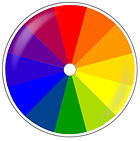
2) The Color Wheel - The most fundamental tool for understanding how colors can be used in coordination with one another is the color wheel. The primary colors of red, blue, and yellow are the basics of the color wheel, and all other colors are derived from these. Secondary colors of orange, green, and violet are formed when two of the three primary colors are mixed together. Tertiary colors are derived by mixing a primary color with a secondary color, blending them into less vivid colors.


3) Using Color to Create Atmosphere - Understanding the psychology of color and the color wheel can help you to create a unique atmosphere in any room of your home. For example, when decorating a kitchen or family room that is often used for entertaining and socializing with guests, you might consider using the warm or active colors. When decorating a den used for reading or a cozy bedroom, you might chose calm and soothing colors that help you to create an atmosphere conducive to relaxing.


When you understand the basics of colors and how they can be used to influence the atmosphere of your home, you’ll be able to create the exact look and feel you hope to achieve. To learn more about how to use color in decorating your room or home, visit our free lessons at www.howtodecoratemyhome.net.